Introduction
Today, I want to introduce you to the concept of contract testing using an analogy—buying the house of your dreams 🏡. Whether you already own your dream home or are still searching for it, you probably know the excitement and anticipation that comes with the process.
Imagine you’ve finally found the perfect house. You’re happy to move forward, but before the keys are in your hand, it’s crucial to set clear expectations with the seller. This involves agreeing on the details: the price, the condition of the house, and any other terms. To formalize this, a contract is drawn up, and a neutral party, like a notary or bank, helps ensure everything is clear and fair.
This scenario mirrors contract testing in software development, where a consumer (the buyer) and a provider (the seller) agree on a contract to ensure their interactions meet expectations. The contract broker (like the notary) acts as a mediator to validate and enforce these agreements.
Let’s break this analogy down further.
Consumer.
In this scenario you’re a consumer. You have specific expectations: size, number of rooms, location, price, neighbourhood, etc.
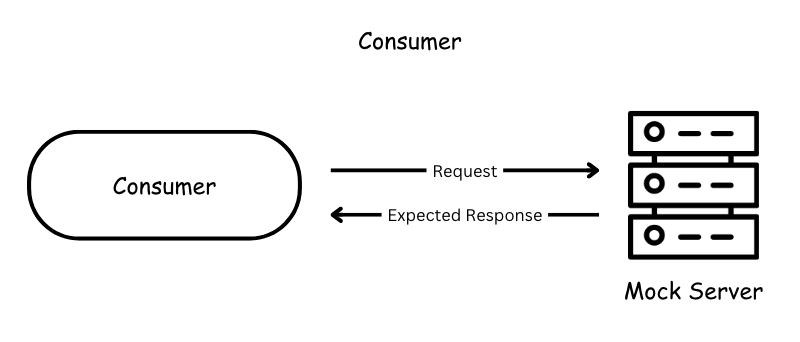
In contract testing, the consumer is a service or application that needs to consume data or services from a provider. The consumer is usually a web or mobile application making a request to a backend service, also it could be another service calling a backend service.
A consumer test verifies that the consumer correctly creates requests, handles provider responses as expected, and uncovers any misunderstandings about the provider’s behavior.
Provider
Then, the seller is the person offering the house. They promise certain features in the house: a garden, a modern kitchen, friendly neighbourhood and so on.
Provider on the other side of the consumer in contract testing that promises to deliver specific data or functionality. Usually it is a backend service.

Contract
The contract is the written agreement between you and the seller. It ensures both parties understand and agree on what is being provided and what is expected (e.g., the price, delivery date, features of the house).
The contract is no different in software. The contract is a formal agreement between the consumer and provider about how they will interact (e.g., API specifications, request/response formats).
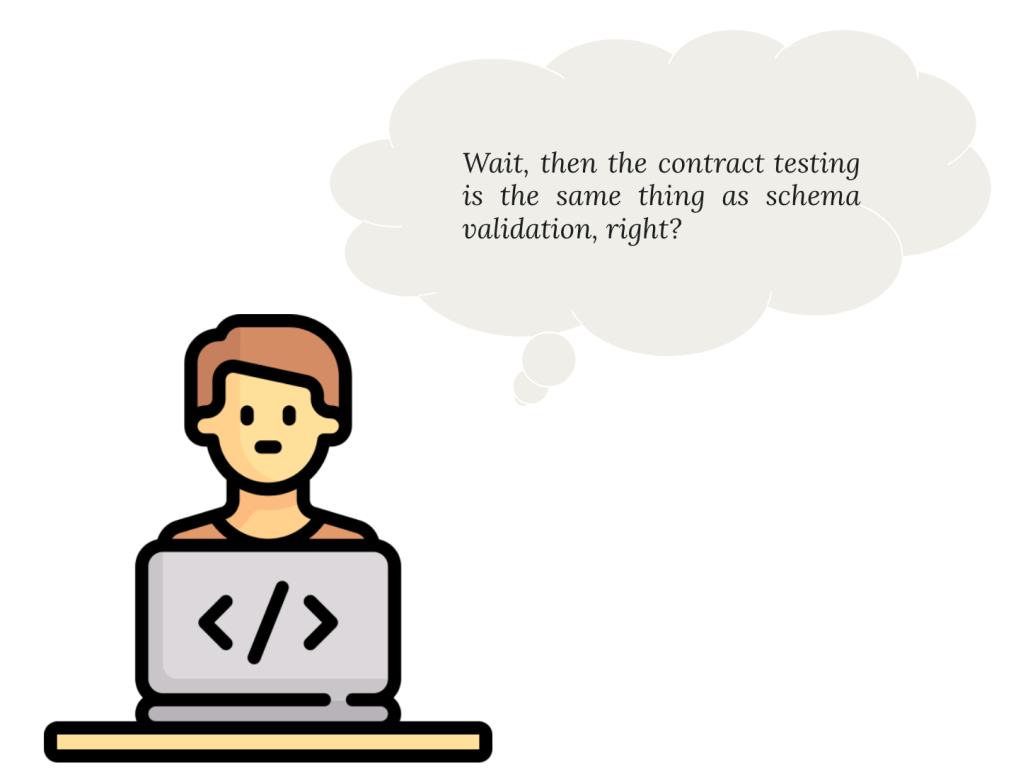
Hmmm.. not really! Contract isn’t the same as JSON Schema. This article explains well the difference between schema-based and contract-based testing.
In short: A schema is a structural blueprint or definition of how data in JSON is organized. It describes the structure, format, and relationships of data.
But the schema does not specify how the data should be used, when it should be provided, or how the interaction between the consumer and provider should behave. It’s purely about the data format and structure.
A contract includes the schema but also goes beyond it to define the behavioral and interaction agreements between the consumer and provider.
Contract includes following data:
- The name of the consumer and provider
- Data requirements for the request
- Interactions between consumer and provider
- Matching rules for the dynamic values
- Environment and deployment information

Contract Broker
The contract broker, like a bank or notary, helps validate and mediate the agreement. They ensure that both parties adhere to their commitments.
In contract testing, the contract broker could be a tool or framework (e.g., Pact) that stores and validates contracts. It ensures the provider and consumer stick to their agreed-upon specifications.
The broker helps verify the compatibility between the two parties independently, ensuring that both can work together smoothly.
Can-I-Deploy Tool
To enable consumers and providers to check if they can deploy their changes to production, Pact provides a command-line interface (CLI) tool called can-i-deploy, which enables consumer and provider to determine the verification status of the contract.
Contract testing approaches
There are mainly two ways to approach contract testing:
- The consumer-driven contract testing (CDCT) approach
- The provider-driven contract testing (PDCT) approach
In these series I am going to discuss traditional CDCT approach.
Consumer-Driven Testing
In the consumer-driven approach the consumer is driving the contract. As a consumer before finalizing the house purchase, you might inspect the house to confirm it meets your expectations and publish your expectations as a contract to the broker. On another side, the seller must ensure their house is as described in the contract and ready for sale. This is like provider-side testing, ensuring they deliver what the contract specifies.

Contract testing ensures that consumers (buyers) and providers (sellers) are on the same page regarding their expectations and deliverables, with a broker (notary or bank) facilitating the process. This approach reduces the risk of miscommunication and ensures smooth collaboration—whether you’re buying a house or building software systems.
Conclusion
Contract testing acts as the bridge between consumers and providers, ensuring smooth collaboration. Much like finalizing the purchase of your dream house, both parties agree on a contract that outlines expectations and deliverables, with a broker ensuring everything aligns. Whether you’re buying a house or developing software, clear agreements lead to smoother outcomes!
Next, we’ll explore the application under test and hit the ground running with implementation!
 TechNotes
Leave a comment